
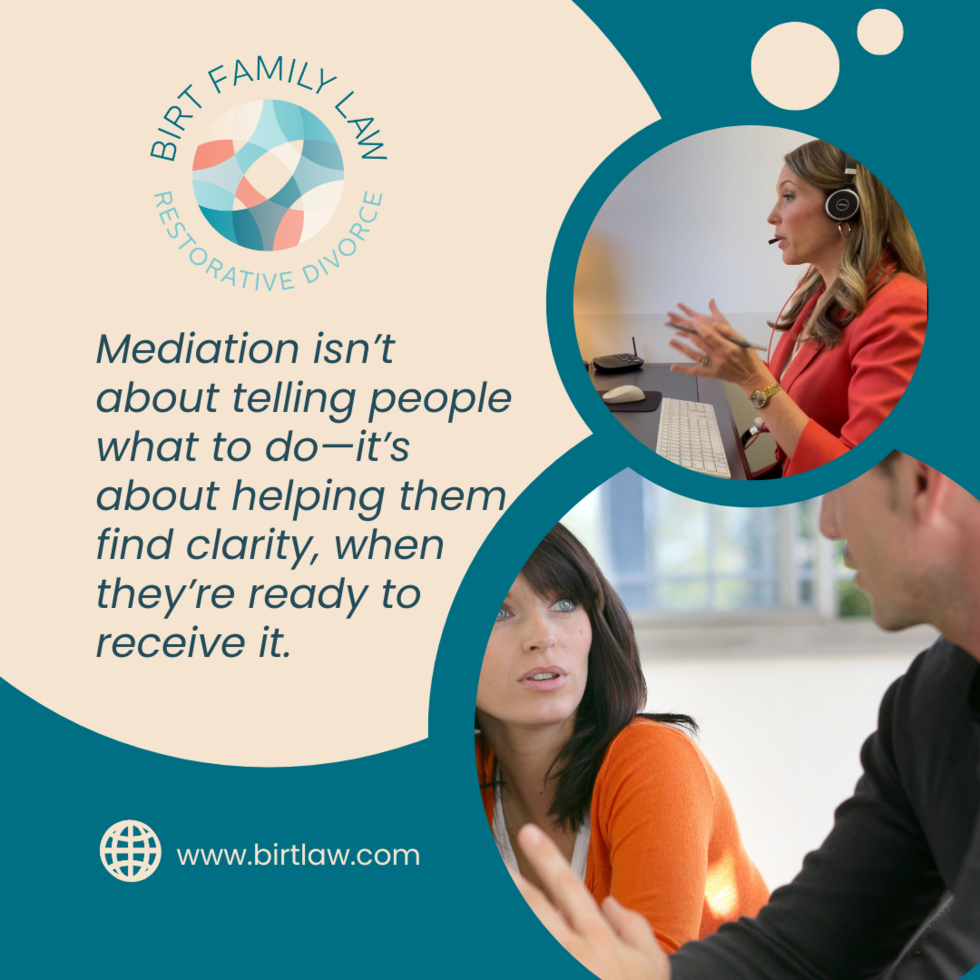
Not every couple is ready for resolution. Here's a blend of recent mediation experiences, instances where couples entered the process hoping for direction, but left without agreement, and why these moments hold powerful lessons for anyone considering mediation.
When people hear the word “mediation,” they often assume it's a simpler, more peaceful alternative to divorce court. It can be, but only when both participants are willing, emotionally present, and ready to engage in good faith.
Recently, I worked with several couples whose stories remind us that mediation is not magic. It's a process, and like any process, its success depends on the people involved.
What follows is a composite story, drawn from multiple cases, that illustrates common reasons mediation can break down, and what to consider before you begin.
The Couple: Hope, Hurt, and an Unspoken Wall
A young couple came to me after a difficult chapter. The wife had recently had an affair. While she was emotionally conflicted and defensive, her husband had accepted the reality of the situation and expressed a desire to work toward a respectful divorce. He did not want the marriage to end, but he was willing to explore options through mediation.
From the start, the wife seemed emotionally overwhelmed. In our individual meetings, she carried visible shame, yet projected that discomfort as frustration toward the process, toward her husband, and at times, toward me, the mediator. The husband, meanwhile, was organized and earnest, was doing his best to remain respectful while clearly grieving.
They asked me to guide them through asset division, parenting discussions, and financial expectations. But something unexpected happened.
The Misunderstanding: “Just Tell Us What To Do”
In a joint session, the couple turned to me and asked:
“Can you just tell us what's fair? What we should each get? How would this play out in court?”
It's a common question. And it's built on a common misconception.
Mediators are not judges. We are not here to make decisions for you. Instead, we serve as educators and communication facilitators, helping you understand your options, guiding your conversations, and providing structure so you can make informed choices together.
I gently explained this. I also offered to involve a divorce financial neutral, a professional trained to prepare financial scenarios for couples, especially when one partner earns significantly more or when future earning potential is in question. But that wasn't what they wanted.
What they really wanted, perhaps even unconsciously, was someone to remove the discomfort of having to confront their values, their fears, and each other.
The Breakdown: When Emotion Overrides the Process
During a discussion about spousal maintenance, I explained that in Illinois, spousal support is often temporary, especially for younger couples. We began to explore what would be realistic if the wife eventually returned to the workforce, and unable to be supported by child support alone.
Her response was quick and sharp:
“I find this line of questioning very degrading.”
And just like that, she ended the session. She left the Zoom room and never returned to mediation. Despite my follow-up and the referral to a divorce financial neutral, the couple chose not to continue.
The Takeaways: What You Should Know Before Starting Mediation
Mediation can help families resolve the hardest transitions with dignity. But only when:
-
- Both people are ready to face the situation honestly
-
- The process is respected, not used as a shortcut
-
- Each party understands the role of the mediator
-
- Outside experts are welcomed, not rejected, when things get complex
-
- Emotions are acknowledged, not projected
If you're entering mediation hoping someone will simply “tell you what to do,” you may not be ready. But if you're willing to be guided, with compassion, clarity, and structure, mediation can be transformative.
Final Thoughts
I share this not to cast blame, but to offer perspective. Sometimes, the greatest service a mediator can offer is to know when to pause the process. In the above cases, the door remains open, should either party wish to return, when they are ready for a different kind of conversation.
Mediation is not always easy, however, when it works it's because the people in the room are willing to do the work.


Comments
There are no comments for this post. Be the first and Add your Comment below.
Leave a Comment