
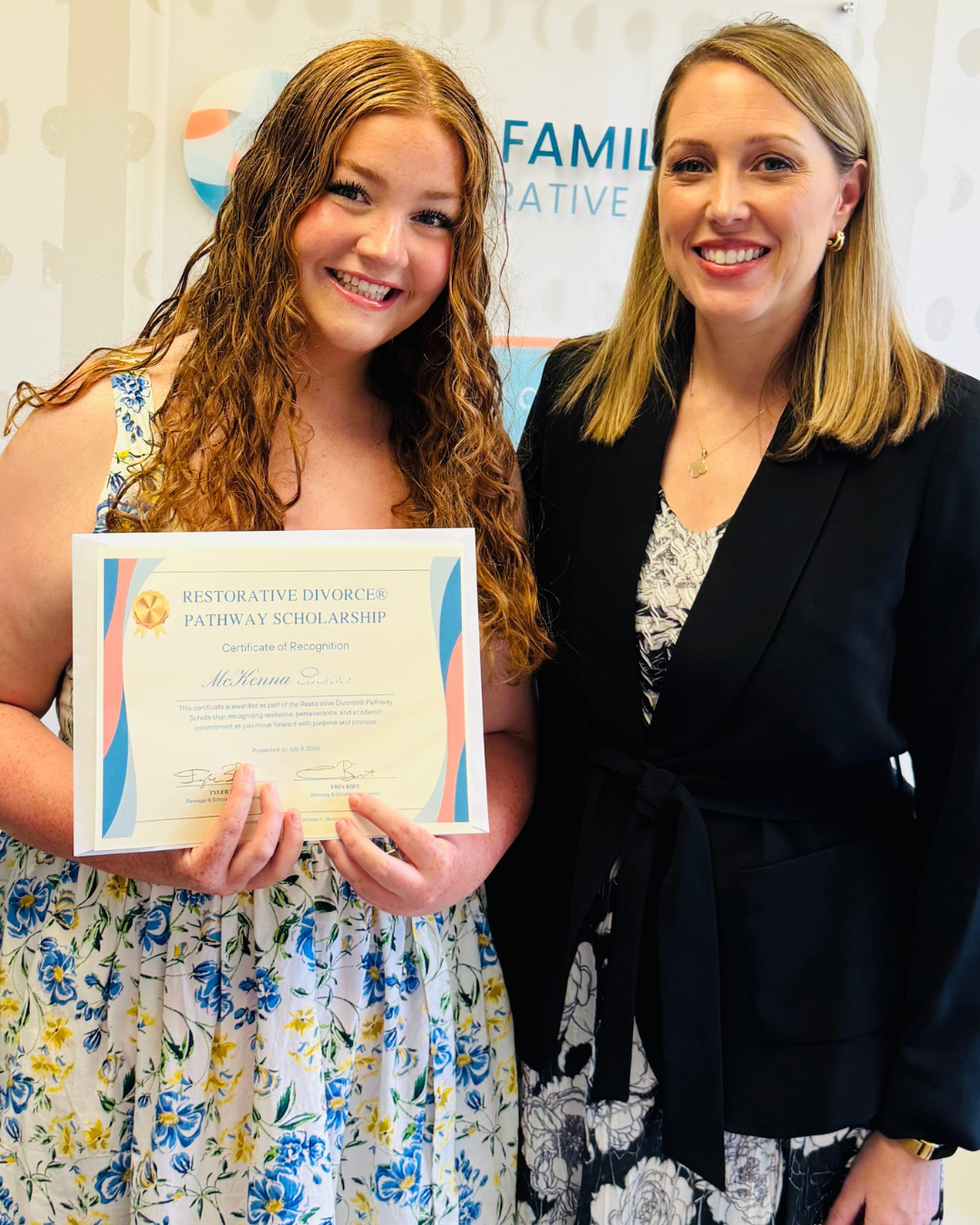
Last week, I had the privilege of sponsoring and awarding a scholarship to an inspiring young woman named McKenna. As part of the scholarship application, she shared her personal experience growing up as the child of divorced parents. With her permission to learn from her story but protecting her privacy by sharing only her first name, I was reminded why I have dedicated my career to helping families navigate divorce differently.
As a family law attorney and mediator, I often meet parents during one of the most stressful seasons of their lives. They are understandably focused on finances, parenting schedules, the family home, and what the future will look like. Those are all important conversations. Sometimes, however, the most important voice in the room is the one that isn't speaking, it's the child's voice.
McKenna's story offers lessons every parent should consider as they begin the divorce process.
1. Children Remember More Than We Realize
McKenna vividly remembers the evening her parents told her they were divorcing. She remembered where she was, what they had been doing beforehand, and how the conversation made her feel. Although she was very young and did not fully understand what divorce meant, she understood that life as she knew it had changed forever.
Parents often underestimate what children absorb. They may believe young children are too little to understand or assume they won't remember difficult moments. The truth is quite the opposite. Children remember emotions long before they understand legal terminology. They remember the tension in the house, raised voices behind closed doors, one parent sleeping elsewhere, the sudden move between homes, or the silence around the dinner table. While they may forget the exact words, they rarely forget how those moments made them feel.
This is why the conversation about divorce matters so much. Children deserve honesty that is appropriate for their age, reassurance that they are deeply loved, and repeated reminders that the divorce is not their fault. They also need consistency. Predictable routines and calm communication help restore the sense of security that divorce often disrupts.
One conversation will never eliminate the sadness of divorce, but parents can choose whether that memory becomes one marked by fear or by reassurance.
2. Conflict Between Parents Often Hurts More Than the Divorce Itself
One of the most powerful parts of McKenna's story was not simply growing up in two homes, it was living with the ongoing conflict between her parents. She described hearing negative comments about one parent from the other and experiencing tension during important events in her life and those moments stayed with her.
Research consistently tells us something many children already know: it is often not the divorce itself that causes the greatest harm, it is the unresolved conflict that continues afterward. When they hear one parent criticize the other, they often feel caught in the middle. They may begin filtering what they say, worrying about hurting one parent's feelings, or believing they must take sides to keep the peace. That emotional burden is far too heavy for any child.
Healthy co-parenting does not require former spouses to become friends. It does not mean they will always agree. It means recognizing that every email, text message, exchange, and conversation should answer one question:
"Will this help my child feel safe?"
Sometimes the most loving thing a parent can do is pause before sending an angry message, speak respectfully during exchanges, or save difficult conversations for private settings rather than allowing children to witness them. Children deserve the freedom to love both parents without feeling guilty for doing so.
3. Divorce Does Not Define a Child's Future
One of the things that stood out most in McKenna's essay was not simply what she experienced, it was what she chose to do with those experiences.
Rather than allowing her parents' divorce to define her, she discovered strengths she may not have recognized otherwise. She became a leader, mentored younger students, spoke openly about mental health, and developed a desire to pursue a career where she could give others a voice. Her experiences shaped her compassion, empathy, and determination. That doesn't mean divorce is easy or that parents should assume children will simply "bounce back." Every child's journey is different. What it does mean is that children are capable of remarkable growth when they are surrounded by love, encouragement, and opportunities to discover who they are.
As parents, we cannot always prevent our children from experiencing disappointment or change. Life inevitably brings challenges. What we can do is help them navigate those challenges with confidence, support their interests, celebrate their accomplishments, and remind them that difficult chapters do not determine the rest of their story.
McKenna's journey is a beautiful reminder that while divorce becomes part of a child's story, it does not have to become the whole story. With the love and support of caring adults, children can grow into compassionate, capable young adults who use their experiences to make a positive difference in the lives of others.
Frequently Asked Questions About Children and Divorce
1. How does divorce affect children emotionally?
Divorce can affect children differently depending on their age, temperament, family dynamics, and level of conflict between parents. Many children remember how safe, supported, and reassured they felt during the process.
2. What can parents do to help children during divorce?
Parents can help children by reducing conflict, avoiding negative comments about the other parent, keeping routines consistent, and reassuring children that they are loved by both parents.
3. Is mediation better for children during divorce?
Mediation can help many families reduce conflict, improve communication, and create parenting agreements focused on the children's needs. It is especially helpful when parents want to avoid unnecessary court conflict.
Choosing a Different Path
Stories like McKenna's are one of the reasons I believe so deeply in mediation and my Restorative Divorce® approach. Divorce will always bring change and no professional can promise otherwise. What we can do is reduce unnecessary conflict, improve communication, help parents make thoughtful decisions together, and create parenting plans that prioritize children's emotional well-being not just the legal requirements.
Years from now, your children may not remember who kept the dining room table or how retirement accounts were divided. They are far more likely to remember whether they felt safe, whether they felt caught in the middle, and whether both parents continued to show up for them with love.
My hope is that every parent reading this realizes they have tremendous influence over the story their own child will one day tell. You cannot change the fact that your family is restructuring but you can help shape how your children remember the journey.
If you are considering divorce and have children, I encourage you to slow down before making decisions driven by fear or anger. Ask yourself not only what is legally possible, but what will best support your children in the years ahead. While divorce may end a marriage, it does not end your child's need for two parents who can lead with respect, compassion, and hope.
Published July 2026
Reviewed by Erin Birt, Attorney & Mediator | 23+ Years Experience


Comments
There are no comments for this post. Be the first and Add your Comment below.
Leave a Comment