
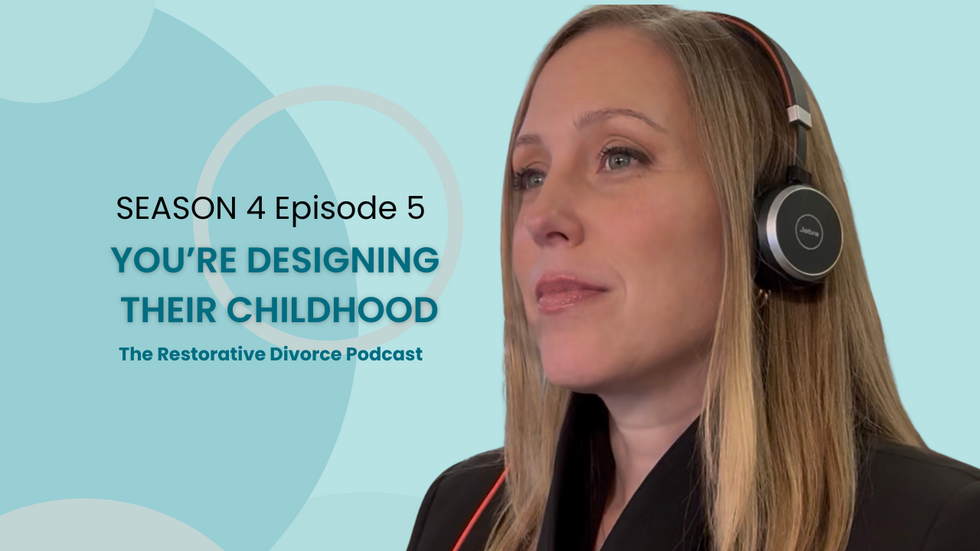
Co-Parenting After Divorce: Designing Your Child's Childhood
Listen to the episode, here.
Watch the episode, here.
Divorce changes more than where a family lives. For parents, one of the greatest fears is what divorce will mean for their relationship with their children and what life in two homes will actually look like. Parenting time, holidays, education, healthcare, activities, communication, and everyday decisions can quickly become sources of conflict when parents are making decisions from fear rather than focusing on the future they want to create for their children.
In Episode 5 of The Restorative Divorce Podcast, Illinois family law attorney and mediator Erin Birt explores a different way to approach co-parenting discussions: you are not simply negotiating a parenting schedule, you are designing your child's childhood. Drawing from more than 20 years of family law experience and principles from The Kitchen Table Divorce®, Erin discusses how parents can prepare for co-parenting after divorce, create parenting plans that can evolve as children grow, and build a foundation that allows children to feel secure and deeply loved in both homes.
Considering divorce or trying to create a healthier parenting plan? I work with parents individually when one parent needs legal guidance and a strategy for moving forward, and together when both parents are ready to resolve their divorce through mediation. Visit BirtLaw.com to schedule a complimentary 15-minute introductory call or a 30-minute Planning Session to discuss your family, your concerns, and your options.
Episode 5 Transcript: What Parents Get Wrong About Co-Parenting Discussions
Co-Parenting After Divorce Begins With the Childhood You Want to Create
One of the most painful realities of divorce isn't signing the paperwork or moving into separate homes. For many parents, the most difficult moment comes when they realize they may no longer be present for every bedtime story, every school concert, every soccer game, every birthday party, or every Christmas morning. Divorce changes the rhythm of family life, and with that realization often comes an overwhelming sense of grief. Parents begin asking themselves difficult questions. Will my children still need me the same way? Will they feel at home in both houses? Will I miss the moments that matter most? Those fears are deeply human, and after more than twenty years helping families navigate divorce, I can tell you that nearly every parent experiences some version of them.
The problem is not that parents experience fear. Fear is a natural response to uncertainty and loss. The problem is that fear often becomes the loudest voice in the room when parents begin discussing their children. Instead of asking, "What arrangement will help our children thrive?" parents often begin asking, "How do I make sure I don't lose?" Without realizing it, conversations shift from building a future for the children to protecting ourselves from pain. When that happens, parenting discussions become less about raising healthy children and more about dividing time, protecting positions, and keeping score.
Welcome back to The Restorative Divorce Podcast. I'm Erin Birt, family law attorney, mediator, and creator of the Kitchen Table Divorce® and Restorative Divorce® approaches. Before we begin today's discussion, I want you to know there are two ways I help parents navigate divorce. Some parents work with me individually because they need legal guidance, answers to difficult questions, and a thoughtful strategy for moving forward. Other parents come to me together because they want to resolve matters through mediation and create a healthier path for their family. If you're still trying to determine which approach fits your situation, I invite you to visit BirtLaw.com where you can schedule a complimentary fifteen-minute introductory call or a Planning Session. During that session we'll discuss your family's circumstances, explore your options, and determine the approach that best serves both you and your children. Both options are designed to help you move forward with clarity instead of waiting for the court system to tell you what comes next.
Today's episode centers around one idea that I hope stays with you long after you finish listening. You are not negotiating a parenting schedule. You are designing your child's childhood. That may seem like a small difference in wording, but it changes the entire conversation. If you believe you're simply negotiating weekends, holidays, and school breaks, every discussion begins to feel like a competition. Every overnight becomes something to win or lose. Every holiday becomes something to defend. Every request for flexibility begins to feel like a sacrifice. But when you step back and remember that you are designing the childhood your son or daughter will remember for the rest of their life, your priorities begin to change.
One of the themes throughout The Kitchen Table Divorce® is that parents know their children better than anyone else. In Chapter 3, I encourage parents to begin their discussions with parenting matters because those decisions will shape their children's daily lives long after the divorce is finalized. Rather than immediately asking a judge to decide these deeply personal issues, parents have the opportunity to thoughtfully discuss decision-making responsibilities, parenting schedules, communication expectations, emergency procedures, and future adjustments together. Those conversations require patience, preparation, and a willingness to think beyond today's emotions. They also require something many parents forget to bring to the table: a shared vision for what they want life to look like after the divorce.
I often ask parents to imagine themselves five or ten years into the future. Their children are older now. They are thriving in school, developing friendships, participating in activities they enjoy, and moving confidently between two homes. They don't feel responsible for managing their parents' emotions. They don't worry about mentioning one parent while spending time with the other. They don't feel guilty for enjoying a vacation with Mom or laughing with Dad. Instead, they simply know they are deeply loved by both parents. That picture may seem almost impossible when you're sitting in the middle of a painful divorce, but I have seen families create exactly that future. It rarely happens by accident. It happens because parents intentionally make decisions today that support the childhood they want their children to remember tomorrow.
When parents lose sight of that vision, fear naturally fills the gap. One parent begins worrying about losing influence over educational decisions. Another worries about missing holidays or extracurricular activities. Someone fears the children will become closer to the other parent. Another worries that they will slowly become less important simply because they have fewer overnights. Those concerns are understandable, but they also have something in common. They are focused on the parent's experience rather than the child's experience. Healthy co-parenting begins when both parents make the difficult shift from asking, "What feels fair to me?" to asking, "What creates the healthiest environment for my children?"
That shift is not easy because parenting discussions touch something incredibly personal. Marriage can end, but parenthood never does. Even after a divorce is finalized, parents continue making decisions together for years. They attend parent-teacher conferences, school concerts, graduations, sporting events, weddings, and eventually perhaps even birthdays for grandchildren. The relationship changes, but it does not disappear. That is why I often tell parents that the divorce decree is not the finish line. In many ways, it is the beginning of a new parenting partnership. The question is not whether you will continue parenting together. The question is how you will do it.
One of the greatest gifts you can give your children is the confidence that they never have to choose between the two people they love most. Children should never feel that loving one parent somehow betrays the other. They should never feel responsible for carrying adult burdens or resolving adult disagreements. They deserve the freedom to simply be children. That freedom begins with the conversations parents have long before the divorce is finalized. Every respectful discussion, every thoughtful compromise, and every child-centered decision lays another brick in the foundation of your family's future.
As we continue today's discussion, I want you to keep returning to one simple question.
What kind of childhood do I want my child to remember?
Because once that question becomes your guide, nearly every parenting conversation begins to look different.
Creating a Parenting Plan That Works as Your Children Grow
So how do parents begin creating that kind of future?
The answer is not found in a calendar. It begins with the conversations surrounding the calendar. One of the reasons I devoted an entire chapter of The Kitchen Table Divorce® to parenting is because the parenting schedule is only one piece of raising children in two homes. Parents also need to discuss how major decisions will be made, how they will communicate, how emergencies will be handled, how school and medical information will be shared, and how they will revisit their parenting plan as life changes. Those conversations may not seem exciting, but they often determine whether co-parenting becomes manageable or miserable.
Let's begin with decision-making because it often creates confusion. Many parents focus almost exclusively on parenting time while overlooking the hundreds of decisions they will continue making together after the divorce is final. Your children will still go to school. They'll still need doctors, dentists, counselors, coaches, tutors, and perhaps therapists. They'll join sports teams, school plays, clubs, and activities. They may require braces, tutoring, or specialized educational services. The divorce does not eliminate those responsibilities; it simply changes how parents work together to address them.
One of the healthiest questions parents can ask each other is not, "Who gets to decide?" Instead, ask, "How do we want to make important decisions together?" That subtle change shifts the conversation away from control and toward collaboration. In my experience, parents who establish clear communication expectations early avoid countless misunderstandings later. Will you communicate primarily by email or text? Will you schedule monthly check-ins to discuss upcoming school events and extracurricular activities? What happens if a decision cannot wait? How will emergencies be handled? These discussions may seem unnecessary while everyone is getting along, but they become invaluable when life becomes busy or stressful. Preparing for future disagreements is one of the best ways to reduce future conflict.
Another important reality is that children do not remain the same age. A parenting schedule that works beautifully for a preschooler may become completely impractical for a teenager. Young children often benefit from frequent contact and predictable routines. As children grow older, their schedules become increasingly complicated. School activities, athletic commitments, part-time jobs, driver's licenses, friendships, dating relationships, and college preparation all influence how parenting time functions. Families that recognize this reality from the beginning are often much more successful because they understand that flexibility is not failure. It is simply part of raising growing children.
One of the most common mistakes I see is parents becoming emotionally attached to the parenting schedule itself instead of remaining committed to the purpose behind it. The purpose of a parenting schedule is not to create mathematical equality. Its purpose is to support healthy, loving relationships with both parents while meeting the developmental needs of the children. Those are not always the same thing. Sometimes a schedule needs adjustment because a child has entered high school and now participates in sports every evening. Sometimes a child begins struggling emotionally and benefits from additional consistency. Sometimes one parent changes careers or relocates closer to the children's school. Healthy parenting plans anticipate that life will change and include a process for reviewing those changes together.
Unfortunately, I also see parents unintentionally place children in the middle of adult conflict. It usually doesn't begin with bad intentions. A parent says, "Tell your dad I'll pick you up early," or "Ask your mom if she signed your permission slip." Over time, children slowly become messengers between two households. They begin carrying information, relaying disagreements, and sometimes even feeling responsible for keeping the peace. Children were never meant to carry those burdens. They deserve the freedom to focus on being children rather than becoming the communication system between two adults.
Another mistake involves documenting every disagreement. There are certainly situations where careful documentation is appropriate, particularly when safety concerns exist or court involvement becomes necessary. However, many parents begin collecting evidence against each other instead of building trust with each other. Every late pickup becomes another complaint. Every forgotten backpack becomes another example of irresponsibility. Every scheduling conflict becomes proof that the other parent does not care enough. Living that way is exhausting, and more importantly, children often sense the tension long before parents realize it. Instead of constantly asking, "How can I prove I'm right?" consider asking, "How can we solve this problem in a way that helps our children?"
I remember working with parents who genuinely loved their children but could not have a conversation without arguing. Every mediation session seemed to return to the same debate: who deserved more parenting time. After listening for quite a while, I finally asked them a different question.
"What do you hope your children say about this divorce when they're adults?"
The room became quiet.
Neither parent talked about equal parenting time.
Neither parent talked about child support.
Neither parent mentioned winning.
Instead, they both described the same dream. They wanted their children to feel secure. They wanted them to know they were deeply loved by both parents. They wanted holidays to remain joyful instead of stressful. They wanted graduations, weddings, and future family celebrations to be filled with happiness rather than anxiety.
That conversation changed everything.
Suddenly, they were no longer negotiating a parenting schedule.
They were designing the childhood they wanted their children to remember.
And once that became the goal, compromise became much easier because both parents were finally working toward the same destination instead of defending different positions.
Why Parents Should Shape Their Children's Future Whenever Possible
Parents sometimes ask me, "If we can't reach an agreement, won't the judge simply decide for us?"
The answer is yes. Sometimes that is exactly what must happen, and our court system serves an important role when families cannot safely or reasonably reach agreements on their own. Judges genuinely care about children and work incredibly hard to make thoughtful decisions. But it is important to remember the position they are in. A judge meets your family through testimony, financial affidavits, legal arguments, exhibits, and a limited amount of courtroom time. They may spend only a few hours learning about a family that has spent years building traditions, routines, and relationships together. They simply cannot know your children the way you do.
You know which child becomes anxious when routines suddenly change. You know which child needs extra reassurance before a doctor's appointment. You know who struggles with transitions, who loves baseball, who forgets homework unless reminded twice, and who still wants one more hug before bed. Those are the details that make your children unique, and those details matter when building a parenting plan. That is why I encourage parents, whenever it is safe and appropriate, to work together to make these decisions rather than immediately asking someone else to make them on their behalf. The Kitchen Table Divorce® is built on the belief that parents, with the right preparation and guidance, are often in the best position to design a parenting plan that reflects the unique needs of their own children.
That preparation is one of the reasons I encourage parents to begin discussing parenting before they become consumed by arguments over finances or property. When you approach these conversations thoughtfully, you create space to ask questions that often never get discussed in litigation. How will we communicate when our child is struggling in school? How will we handle disagreements about extracurricular activities? What will we do if one of us receives a job opportunity that requires travel? How often should we review our parenting plan to make sure it still serves our children's changing needs? These conversations require patience, humility, and a willingness to listen, but they also create the foundation for a healthier co-parenting relationship long after the divorce is over.
One of my favorite moments in mediation happens when parents stop talking about themselves and begin talking about their children. I watch the posture in the room change. The defensiveness softens. The conversation becomes less about proving a point and more about solving a problem. It is not because every disagreement suddenly disappears. It is because both parents have rediscovered their shared purpose. They may no longer agree on everything as spouses, but they still agree on something incredibly important: they both love their children.
That shared purpose is powerful. It reminds parents that although their marriage is ending, their parenting partnership is just beginning. The legal documents will eventually be signed. The divorce will become final. Life will move forward. But birthdays will continue. School programs will continue. Graduation ceremonies will continue. Holidays, weddings, and grandchildren may one day become part of your family's story. The decisions you make today influence not only the next six months but the next twenty years.
As I wrote in The Kitchen Table Divorce®, one of the long-term benefits of a cooperative process is improved co-parenting dynamics. Parents who learn to communicate respectfully during the divorce establish habits that continue long afterward, reducing the negative impact of divorce on their children while creating greater stability as life changes. Collaborative agreements are often easier to revisit because the relationship itself has been built on communication rather than constant conflict.
So before we end today's episode, I want to leave you with one final picture.
Imagine your child twenty years from now. Perhaps they are graduating from college. Maybe they are standing at the altar on their wedding day. Maybe they have become a parent themselves, and you are holding your first grandchild. As you look around the room, your former spouse is there too. Your child is not worried about where everyone will sit. They are not trying to manage tension between the two people they love most. They are simply enjoying one of the happiest days of their life because they know both of their parents are there to celebrate with them.
That future does not begin on graduation day.
It does not begin at a wedding.
It begins today.
It begins with the conversations you choose to have. It begins with your willingness to prepare instead of react, to listen instead of assume, and to ask not, "What is fair for me?" but, "What will allow my children to flourish?" Every respectful conversation, every thoughtful compromise, and every child-centered decision becomes another investment in the life your children will one day look back on with gratitude.
Thank you for joining me for Episode 5 of The Restorative Divorce Podcast. In our next episode, we'll begin exploring another topic that often creates anxiety during divorce—how to have productive financial conversations without allowing money to become the source of unnecessary conflict.
If today's episode resonated with you, remember that you don't have to navigate these conversations alone. I work with parents in two ways. Some come to me individually because they want legal guidance, education, and a clear strategy for moving forward. Others come together because they want to resolve matters through mediation and build a healthier future for their family. If you're unsure where to begin, I invite you to schedule a complimentary fifteen-minute introductory call through BirtLaw.com. If you'd like more personalized guidance before deciding on legal services, we can spend thirty minutes together during a Planning Session discussing your family's circumstances, your concerns, and the options available to you. My goal is to help you make informed decisions that benefit both you and your children instead of simply reacting to the stress of the moment.
Until next time, remember this:
Your children will probably never remember the wording of your parenting plan. They will remember what it felt like to grow up inside it.
So don't simply negotiate a parenting schedule.
Design a childhood that allows your children to feel safe, deeply loved, and free to thrive in both homes.
Building a Better Co-Parenting Future After Divorce
A parenting plan is a legal document, but your children will experience it as their everyday life. The choices parents make about communication, flexibility, decision-making, parenting time, and conflict can shape how secure children feel in both homes for years after a divorce.
The goal is not perfect co-parenting or parents who never disagree. It is to create enough structure, communication, predictability, and flexibility that children are not required to carry the emotional burden of their parents' divorce. The decisions you make during divorce can become the foundation for graduations, holidays, weddings, and ordinary family moments many years from now.
If you are a parent considering divorce in DuPage County, Cook County, Kane County, or the surrounding Chicago area, there are two ways we can work together. If you need individual legal guidance, we can develop a strategy for your circumstances and your children. If you and your co-parent are ready to work together, mediation provides a structured process for developing parenting and financial agreements outside of unnecessary court involvement.
Visit BirtLaw.com to schedule a complimentary 15-minute introductory call. If you're ready for a more substantive conversation about your situation and options, schedule a 30-minute Planning Session.
Frequently Asked Questions About Co-Parenting After Divorce
What should parents discuss when creating a parenting plan?
A parenting plan should address more than where children will spend particular days. Parents should consider parenting time, education, healthcare, extracurricular activities, communication, emergencies, information sharing, holidays, transportation, and how the parenting plan may be reviewed as children's needs change.
How can parents reduce conflict when discussing parenting time?
Begin by focusing on your children's needs rather than treating parenting time as something one parent wins and the other loses. Clear communication expectations, predictable schedules, thoughtful preparation, and a process for resolving future disagreements can reduce unnecessary conflict.
Should parenting time always be divided equally?
The purpose of a parenting schedule should be to support children's developmental needs and healthy relationships with their parents rather than simply achieving mathematical equality. The appropriate arrangement depends on the children, parents, schedules, and circumstances of the individual family.
Should children carry messages between divorced parents?
Children generally should not be responsible for communicating adult information between their parents. Establishing direct methods of communication between parents allows children to remain children rather than becoming messengers or feeling responsible for managing conflict between two households.
What happens to a parenting plan as children get older?
Children's needs and schedules change. School, activities, friendships, jobs, driving, and other developmental changes can affect how a parenting schedule functions. Parents can consider how they will review and address changing circumstances when developing their parenting plan.
Can parents create their own parenting plan through mediation?
When mediation is appropriate, parents can work with a neutral mediator to discuss parenting time, decision-making, communication, holidays, activities, and other parenting issues and develop agreements tailored to their family's circumstances.
When might court involvement be necessary for parenting issues?
Court involvement may be necessary when parents cannot safely or reasonably reach agreements or when circumstances require judicial intervention. When parents can appropriately reach agreements themselves, however, they have the opportunity to develop solutions informed by their detailed knowledge of their own children.
Does Erin Birt work with one parent or both parents?
Both. Erin works individually with parents who need legal guidance, education, and a strategy for moving forward. She also works with both parents together as a neutral mediator when they are ready to resolve divorce and parenting matters through mediation.
